9 hr
Cotswolds Villages Day Trip from Birmingham
- Expert local guide
- Small group
- Skip-the-line access
- Free cancellation
Day Trip to Cotswolds from Birmingham — Village Tours & Countryside Access
Honey-stone hamlets and Saxon wool routes, an hour from the city
Compare fares, pick the fit — all bookings are mobile-voucher and eligible for free cancellation where shown.
9 hr
9 hr 30 min
10 hr 30 min
| Experience | From | Duration | Rating | Skip-the-line | Guide | Small group | Price | |
|---|---|---|---|---|---|---|---|---|
|
Guided Experience
Most popular
Cotswolds Villages Day Trip from Birmingham
|
Birmingham | 9 hr | ★ 4.6 | ✓ | ✓ | ✓ | $102 | Book → |
|
Guided Experience
Full-Day Cotswolds Villages Tour from London
|
London | 9 hr 30 min | ★ 4.8 | ✓ | ✓ | ✓ | €104 | Book → |
|
Guided Experience
Cotswolds Villages and Oxford University Day Tour from London
|
London | 10 hr 30 min | ★ 4.6 | ✓ | ✓ | ✓ | €92 | Book → |
Worth it for scenic village lovers
A day trip to Cotswolds from Birmingham delivers genuine value for those craving English countryside charm without London's distance. The 90-minute drive puts you into honey-stone villages like Bourton-on-the-Water and Bibury by mid-morning, offering free access to public footpaths, riverside walks, and market squares that define the Area of Outstanding Natural Beauty. Organized Cotswolds tours from Birmingham streamline logistics with transport and village-hopping itineraries, though independent drivers gain flexibility to linger in quieter hamlets. The region rewards slow exploration—thatched cottages, historic wool churches, and rolling Gloucestershire hills create postcard scenes at every turn. Best for visitors who appreciate rural architecture and gentle walking over adrenaline attractions; families and photographers find particular value. The proximity from Birmingham makes this more practical than Cotswolds villages day trips originating from London, cutting two hours off your travel envelope.
Bottom line: If rolling hills and historic English villages align with your travel style, the Cotswolds delivers authentic countryside character within easy reach of Birmingham.
They complement each other; most visitors who do both call the Cotswolds the more scenic, while those seeking culture prefer the Shakespearean heritage of Stratford-upon-Avon.
|
Top pick Cotswolds |
Stratford-upon-Avon | |
|---|---|---|
| Focus | Rural villages and landscapes | Shakespearean history and theatre |
| Transport from Birmingham | Car recommended (1-2 hours) | Train/bus (40-50 minutes) |
| Ideal duration | Full day | Half to full day |
| Primary activity | Walking and sightseeing | Museums and river cruises |
| Vibe | Quiet and pastoral | Historic and busy |
| Entrance fee | 0 GBP (Free to public areas) | Varies by attraction |
| Booking constraints | Parking fills early (09:00–11:00) | None for general town access |
| See tickets & prices |
Verdict: Choose the Cotswolds if you want a day trip to cotswolds from birmingham tours focusing on nature, or pick Stratford-upon-Avon if you prefer an easy-access cultural day trip to cotswolds from birmingham tour that prioritizes historic landmarks and convenient transport.
Hand-picked experiences loved by thousands of travelers
11 hours
Free Cancellation
Discover three enchanting villages nestled in England's timeless countryside on this guided excursion
8 hours 30 minutes
Free Cancellation
Journey through ancient mysteries and storybook hamlets on this full-day adventure from Bristol
10 hours
Free Cancellation
Discover honey-stone hamlets, rolling hills, and hidden corners of England's most beautiful region
1 day
Free Cancellation
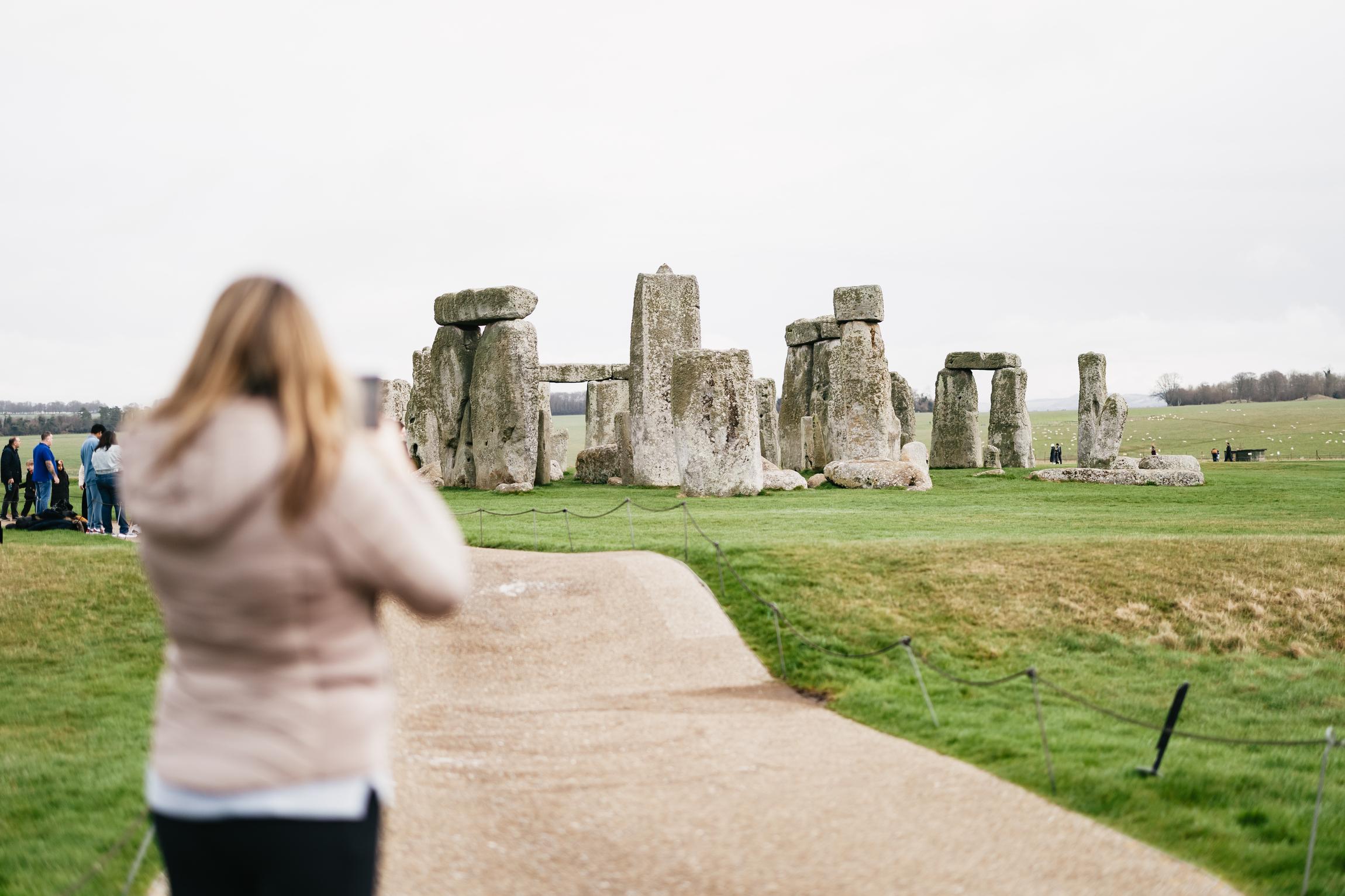
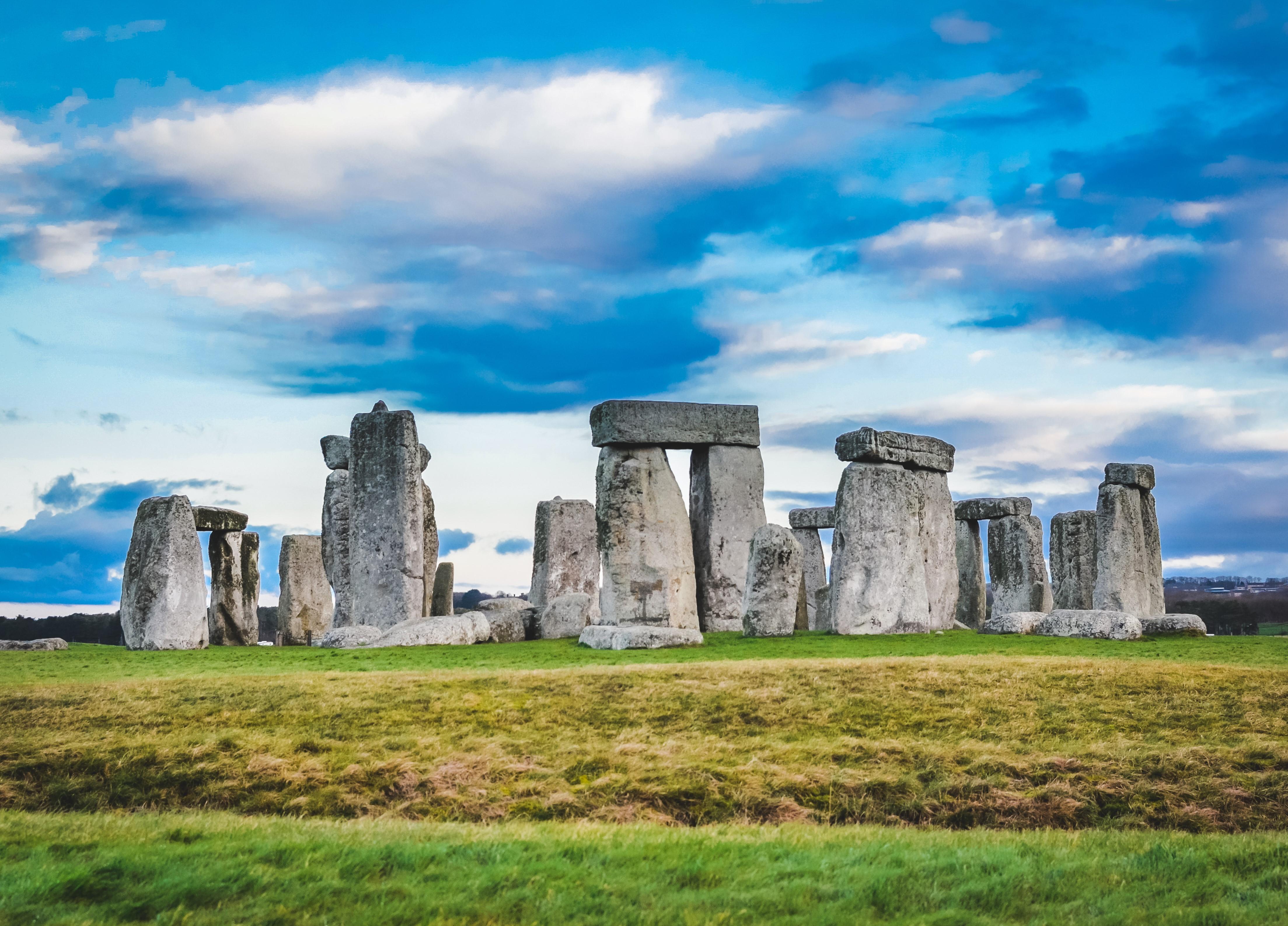
Journey through ancient stone circles and England's most charming villages on this full-day escape
9 hours
Free Cancellation
Venture through England's most enchanting countryside hamlets on a full-day guided excursion
10 hours
Free Cancellation
Explore three iconic villages showcasing honey-stone architecture, literary history, and Downton filming sites
10 hours
Free Cancellation
Full-day escape to England's most beautiful countryside, visiting four historic market towns
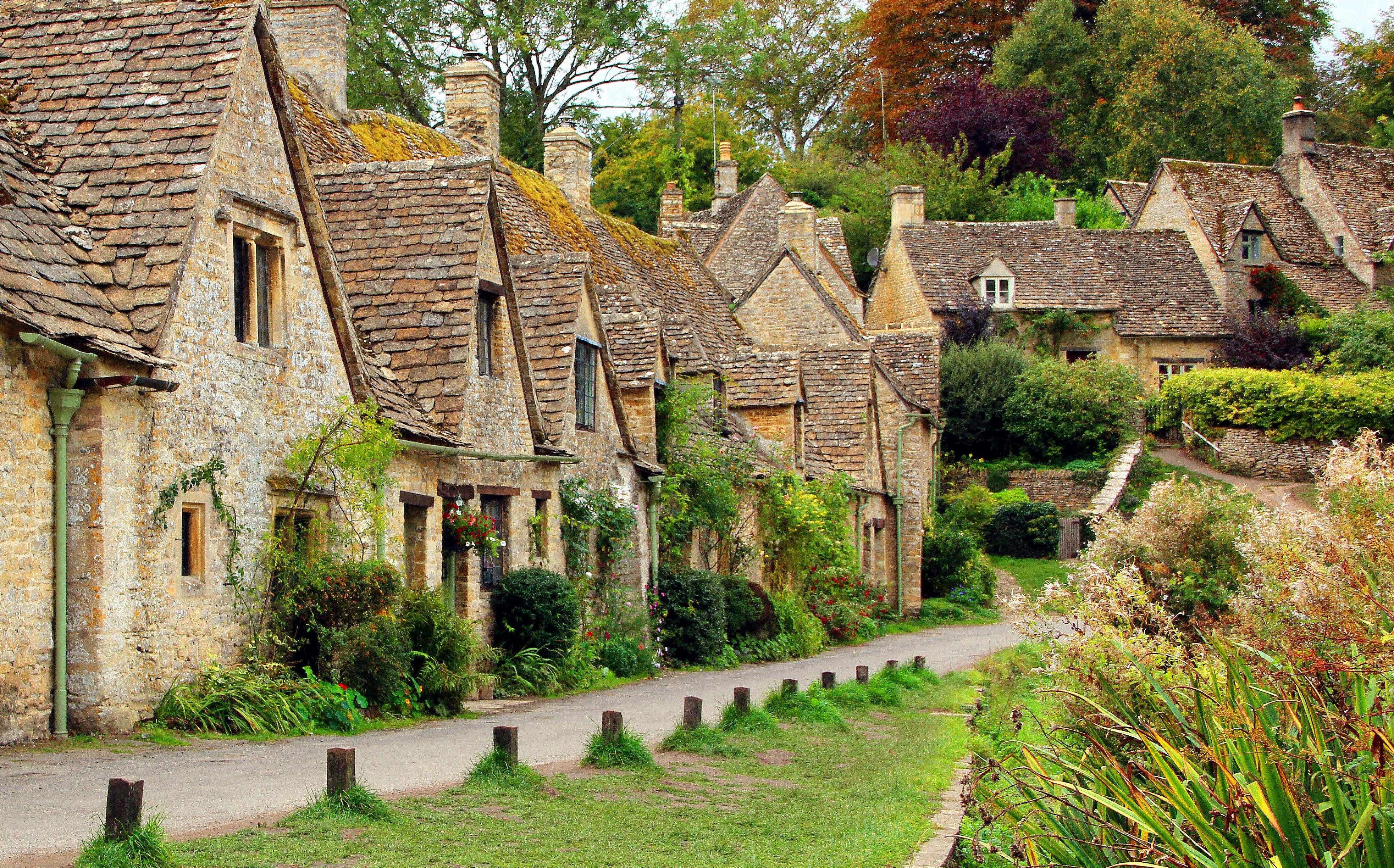
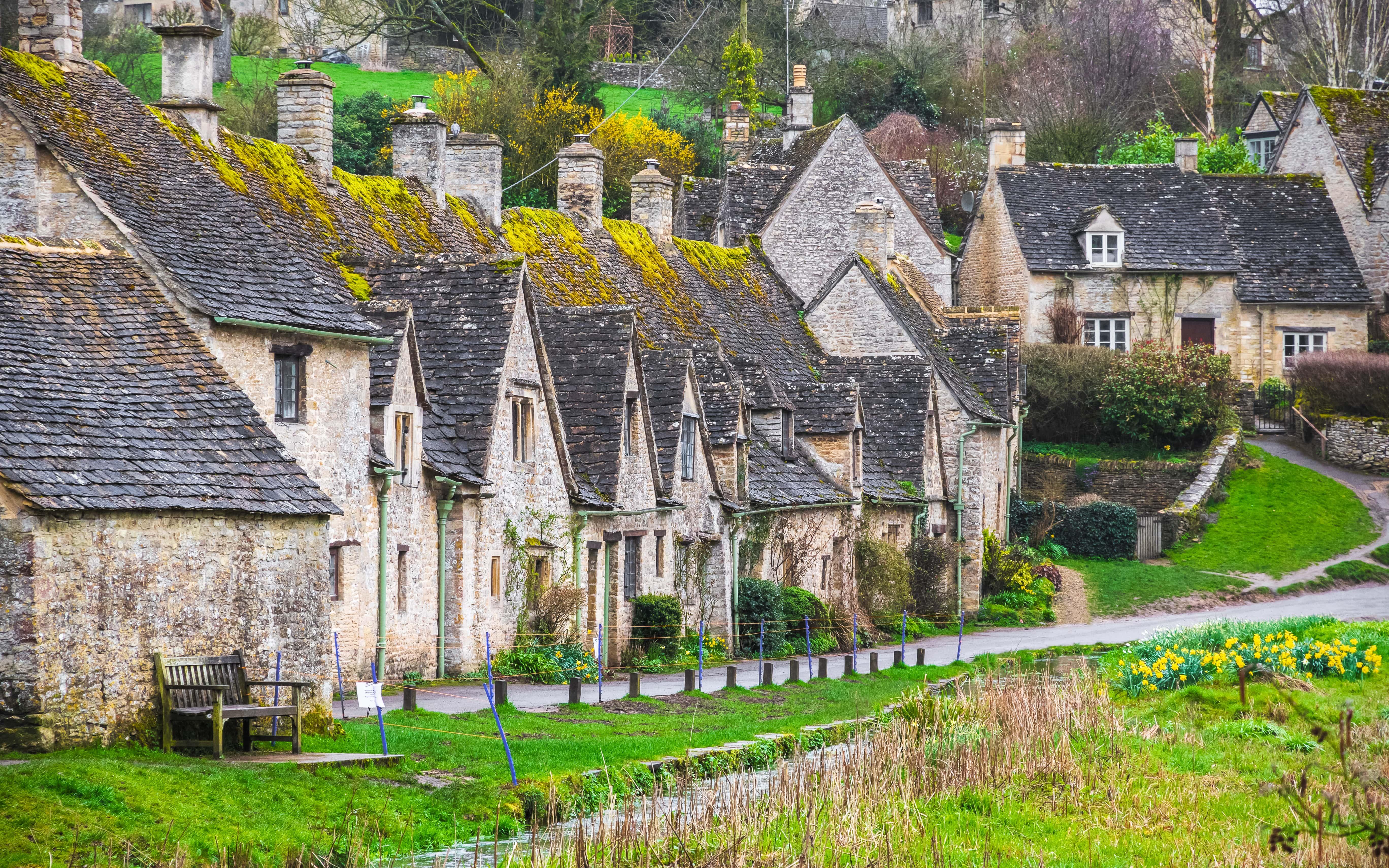
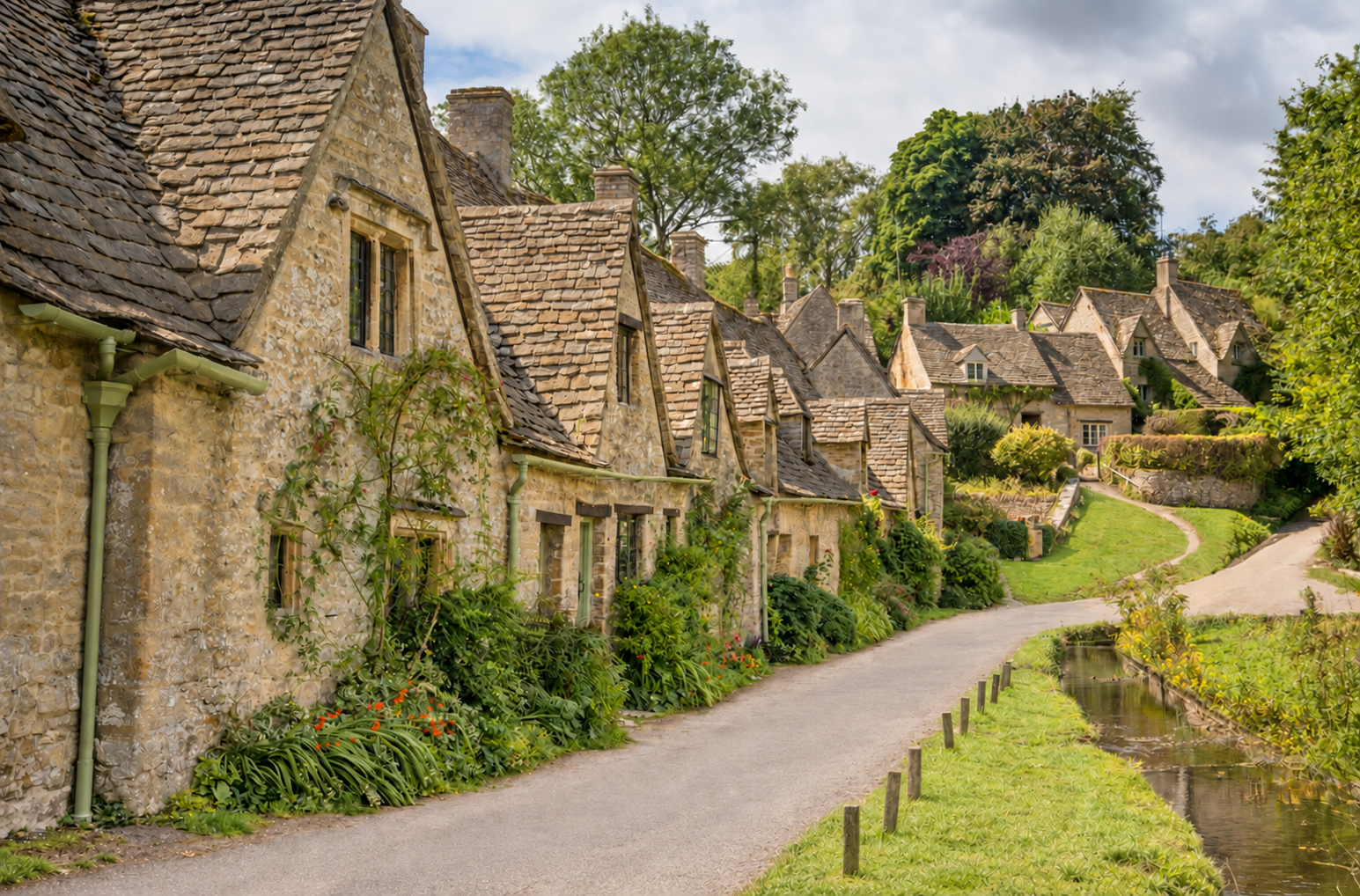
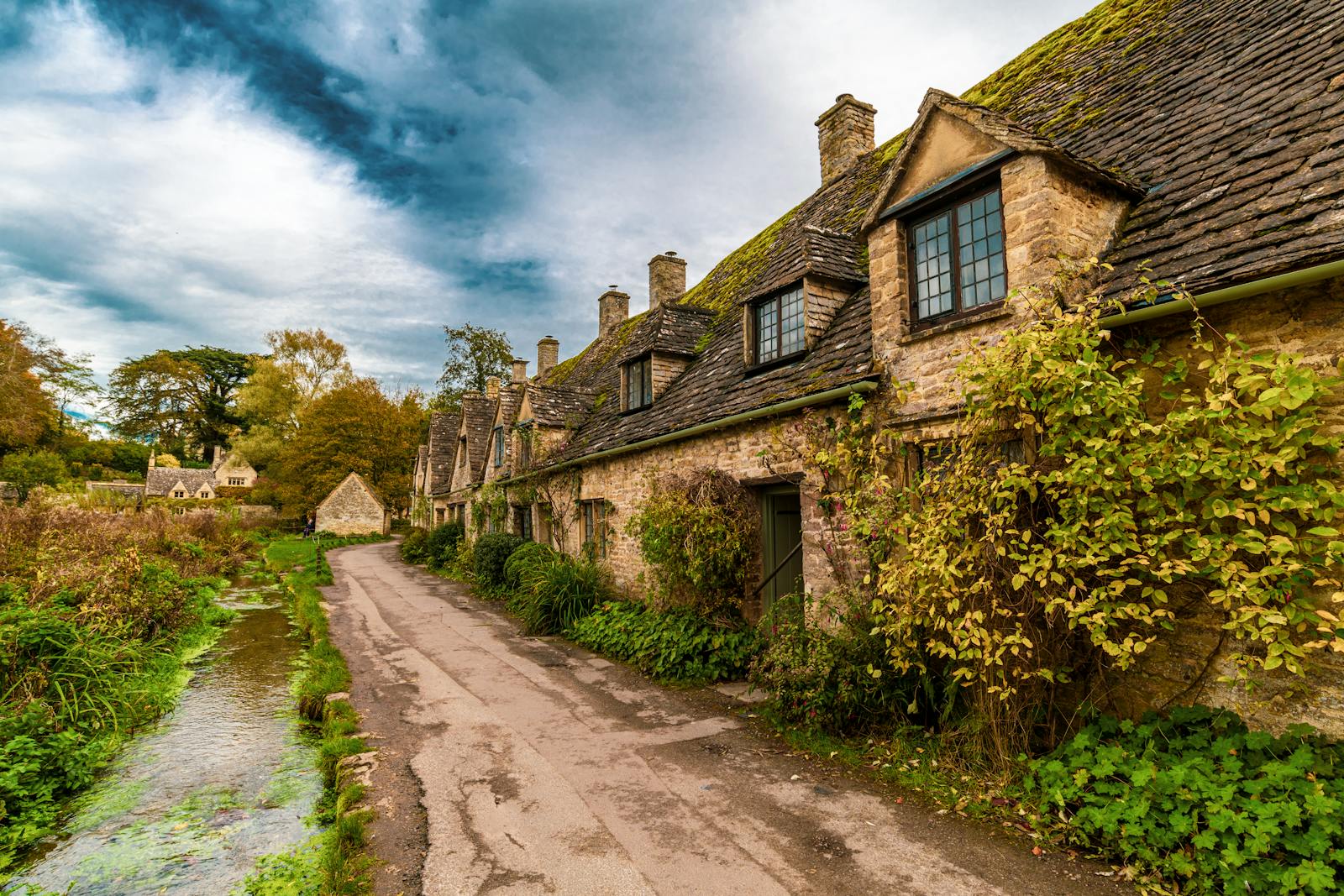
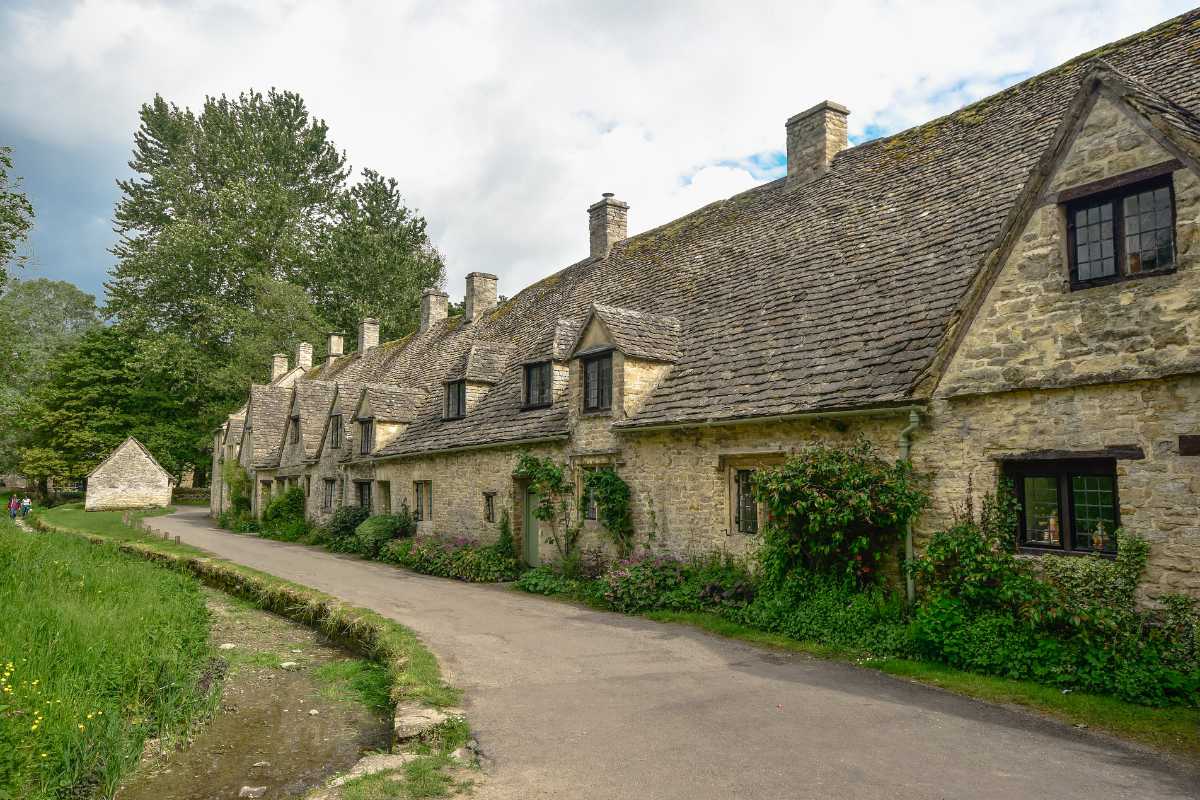
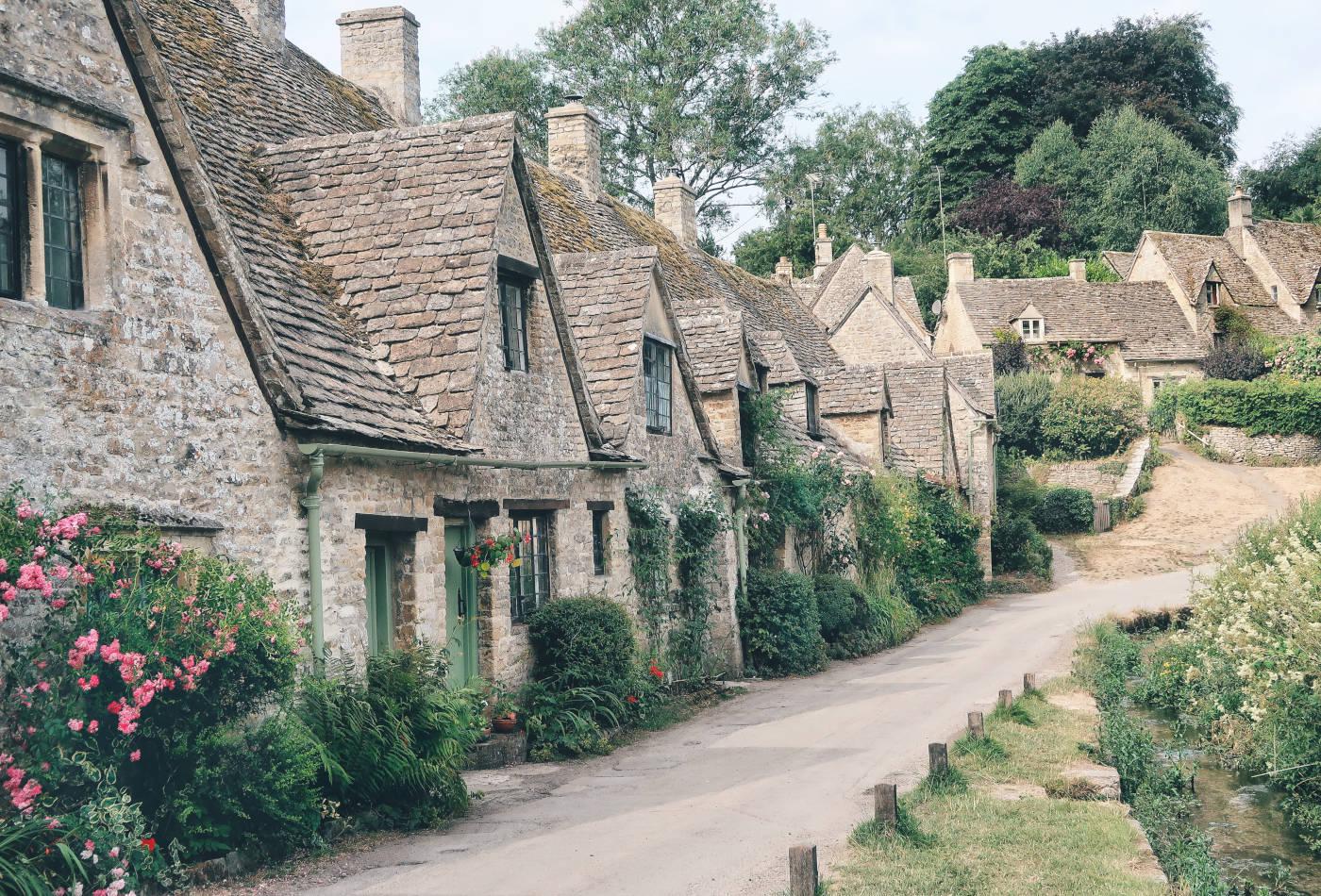
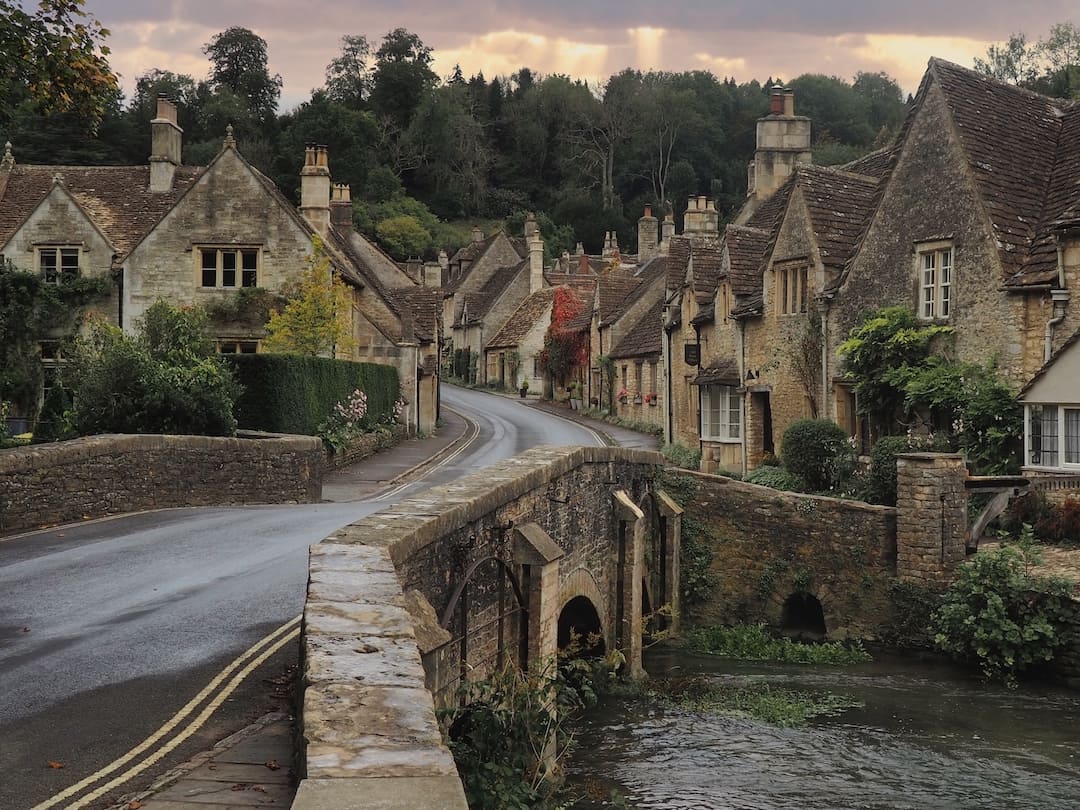
Historic 14th-century weavers cottages famous for their golden stone facades. These buildings are among the most photographed landmarks in the region.
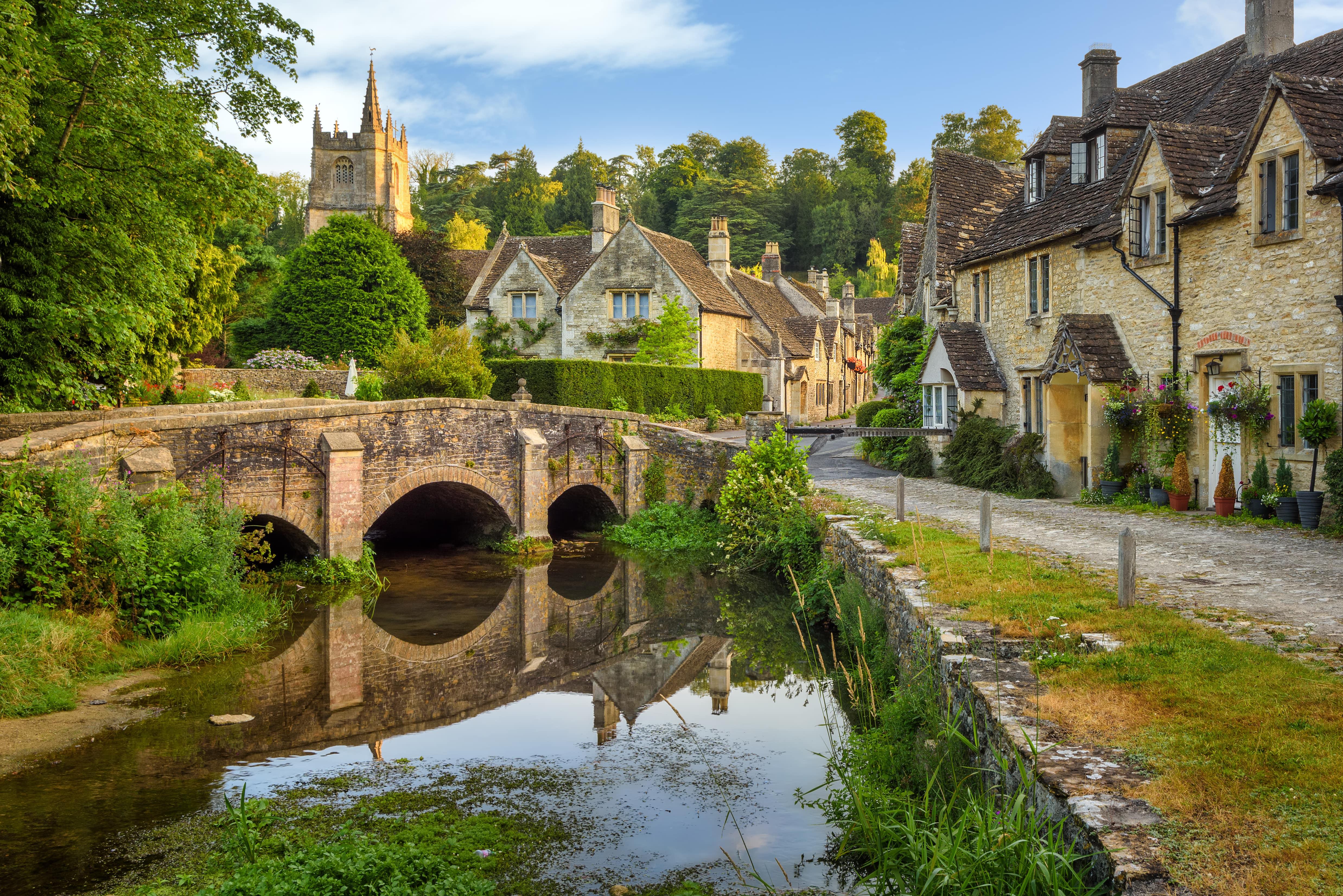
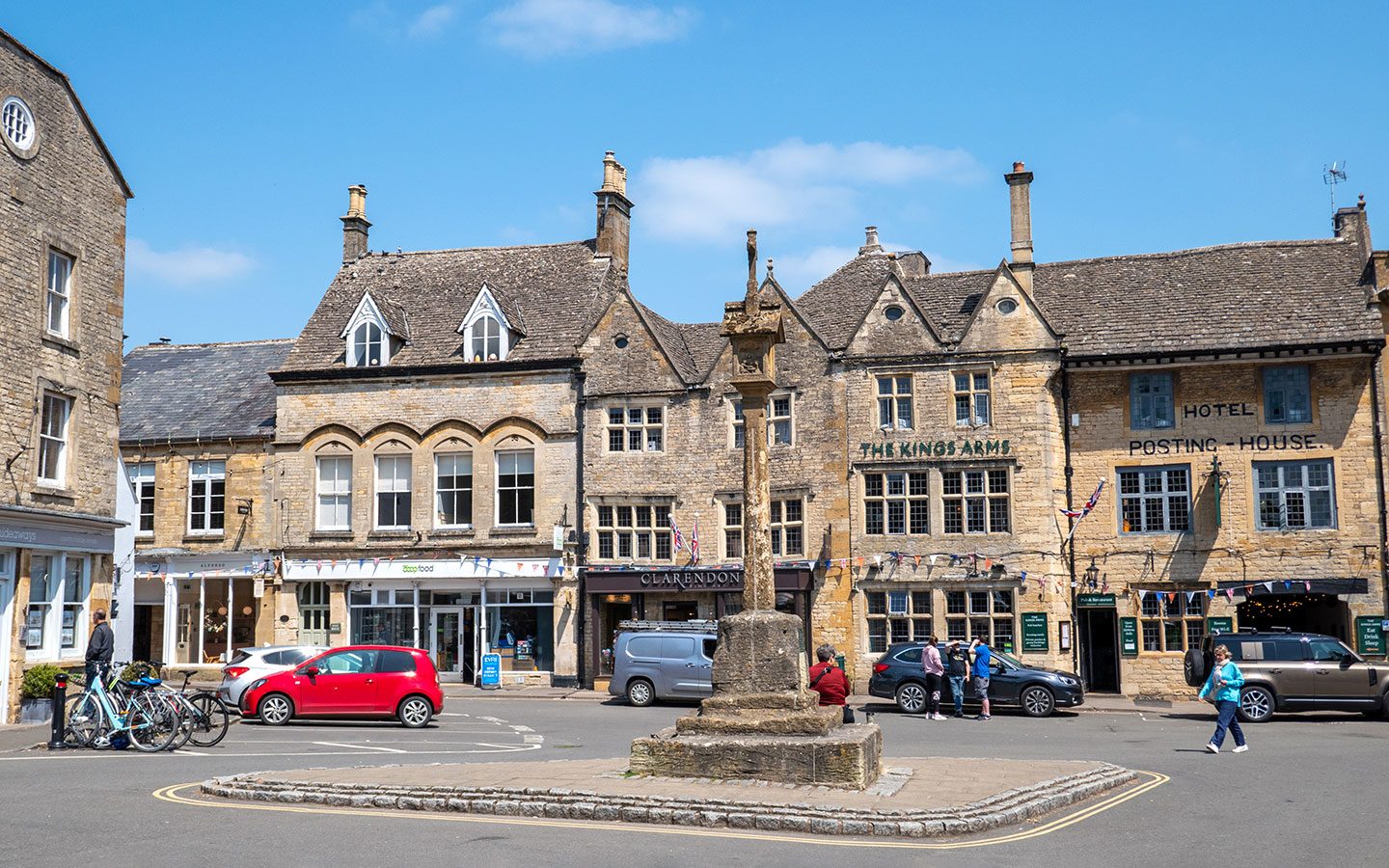
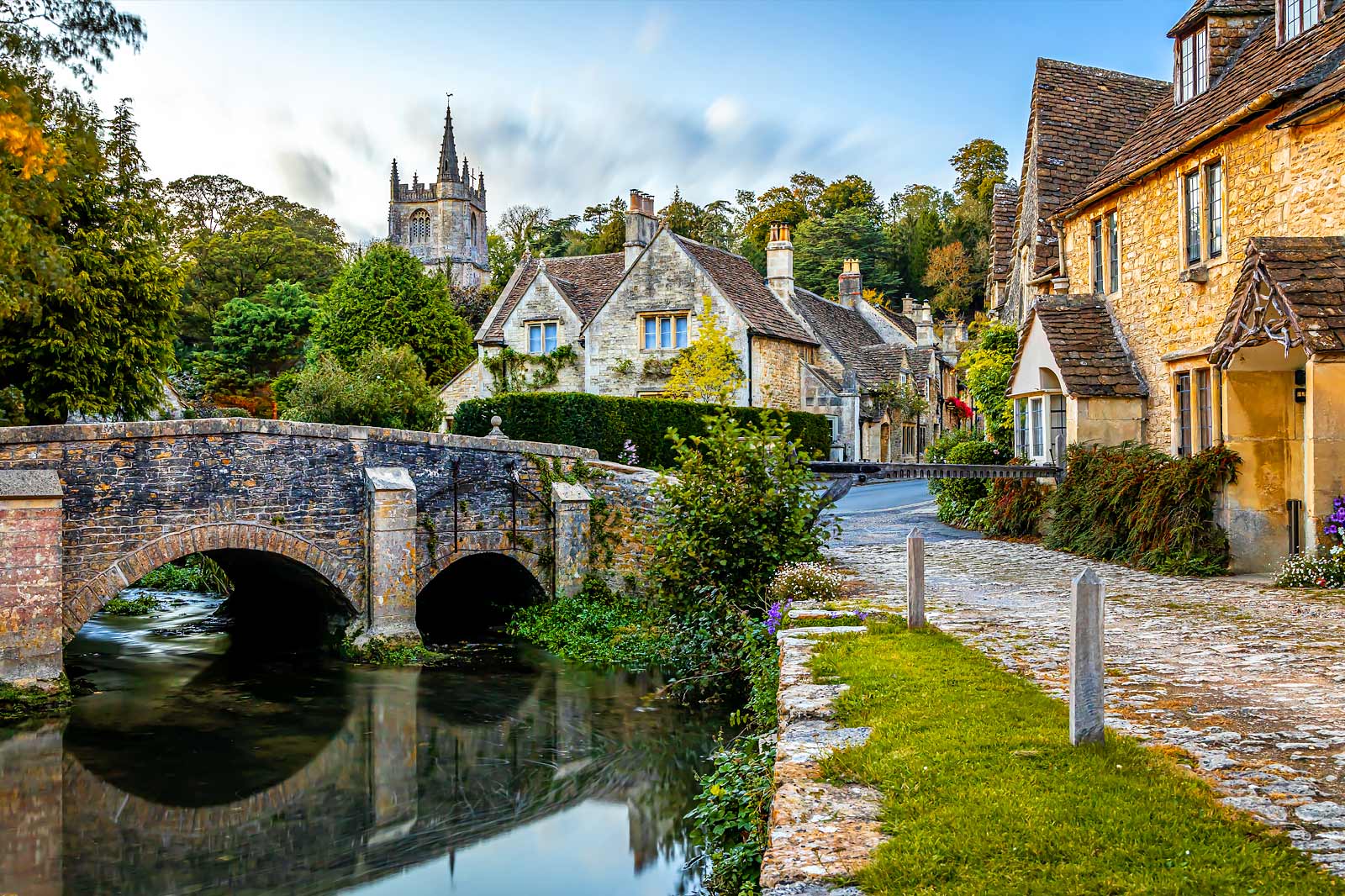
A remarkably preserved village often called one of the prettiest in England. The area features a medieval market cross and historic stone houses.
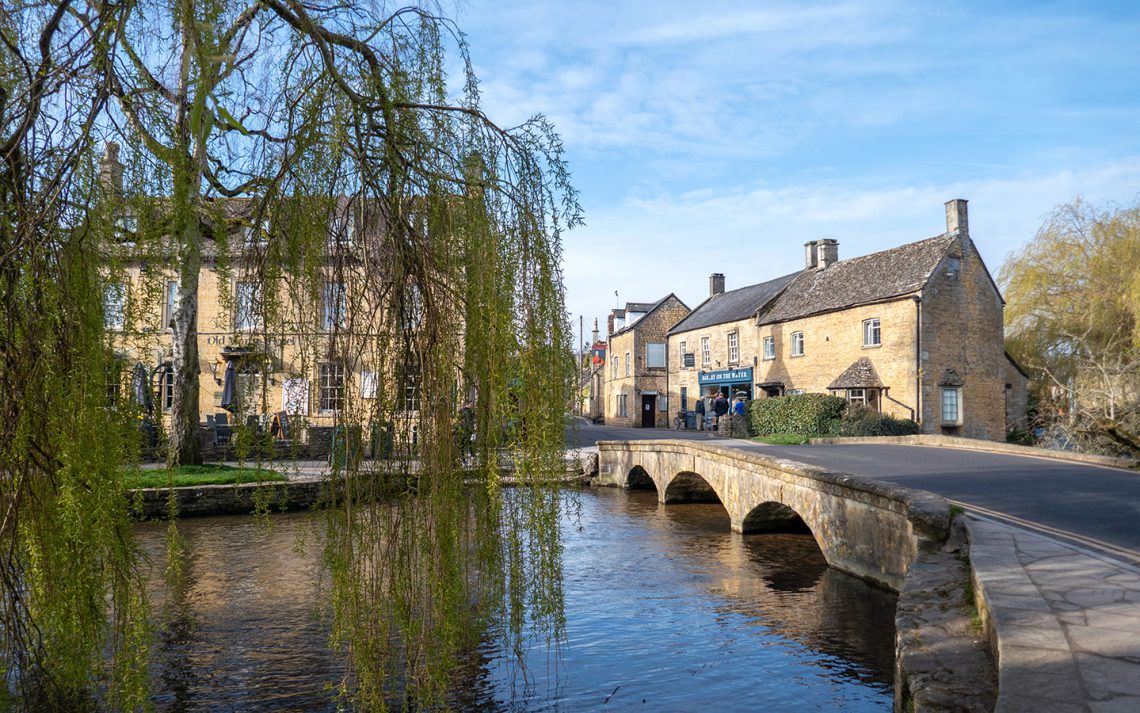
Known as the Venice of the Cotswolds due to the shallow River Windrush. Five low stone bridges cross the water in the center of town.
A historic market square that served as a central trading point for centuries. The surrounding buildings showcase classic honey-colored Cotswold stone architecture.
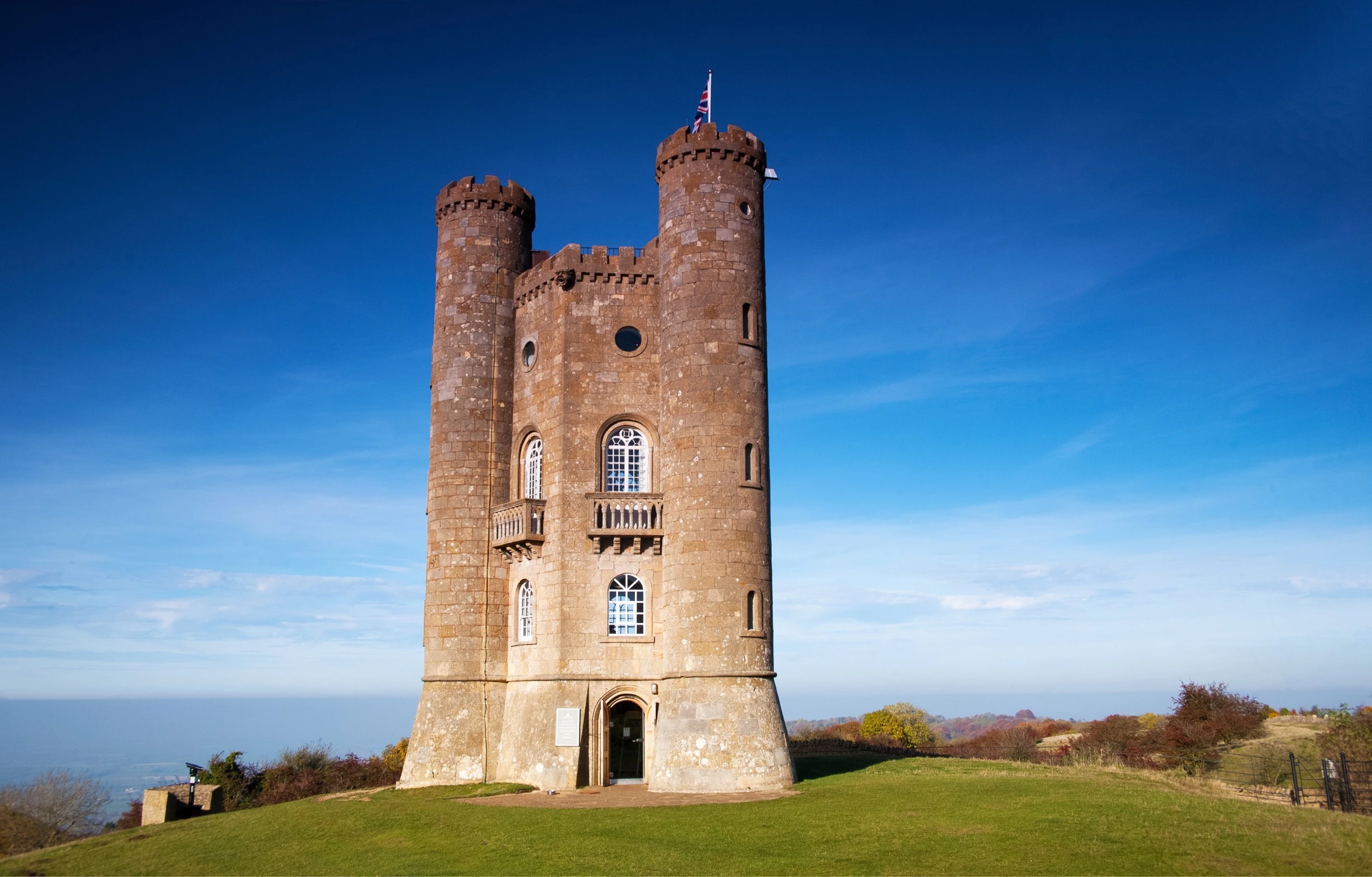
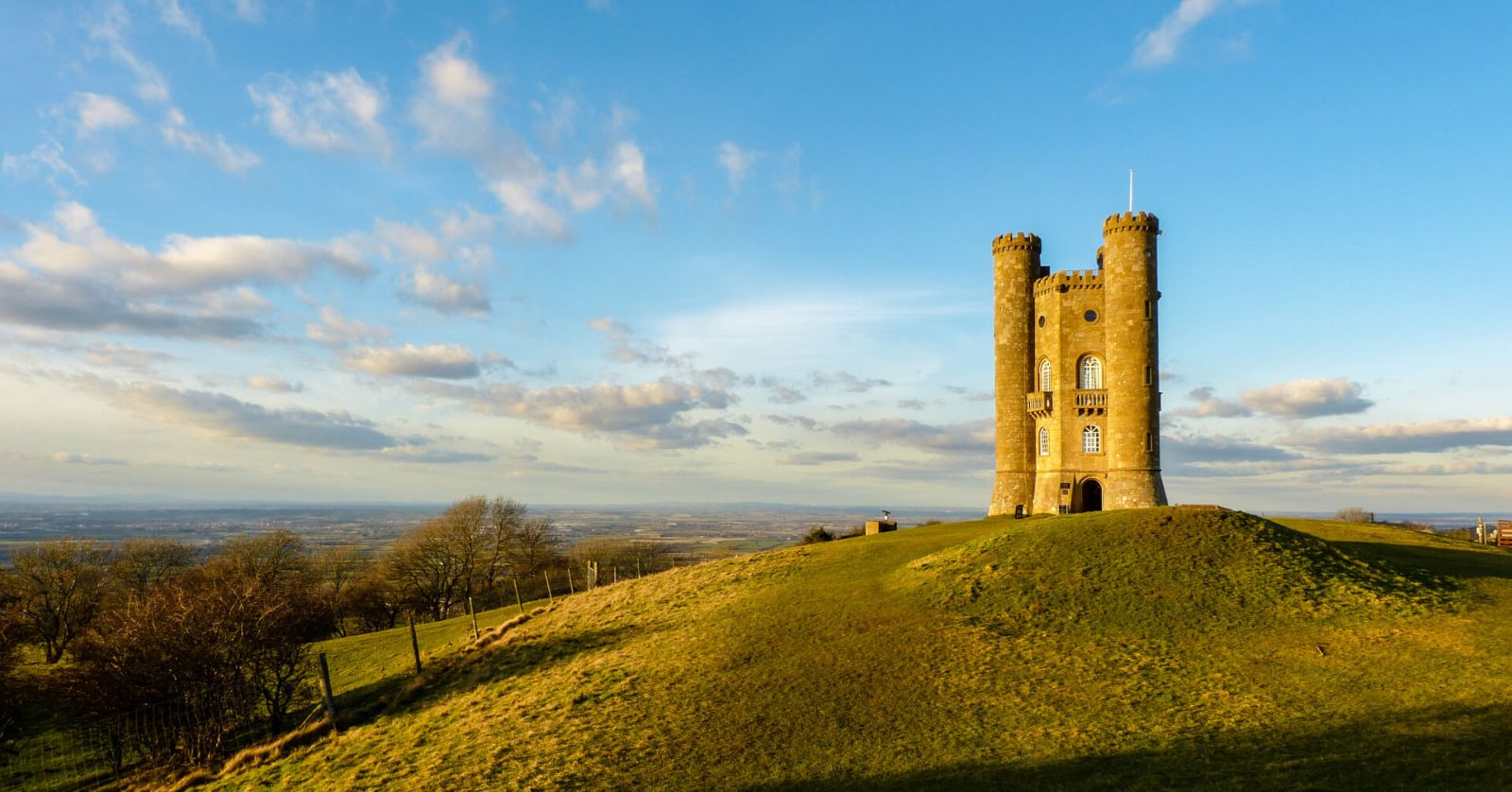
A distinctive folly located on a hill offering expansive views across the countryside. It was built in 1798 and stands as a significant landmark.
You leave Birmingham mid-morning and cross the Severn Vale, watching the escarpment rise ahead in a long limestone ridge. Your first stop is Broadway, where you walk the high street past facades in pale Bath stone, some fronted with mullioned windows original to the 1600s.
The village church sits a mile uphill; most groups photograph the green and move on.
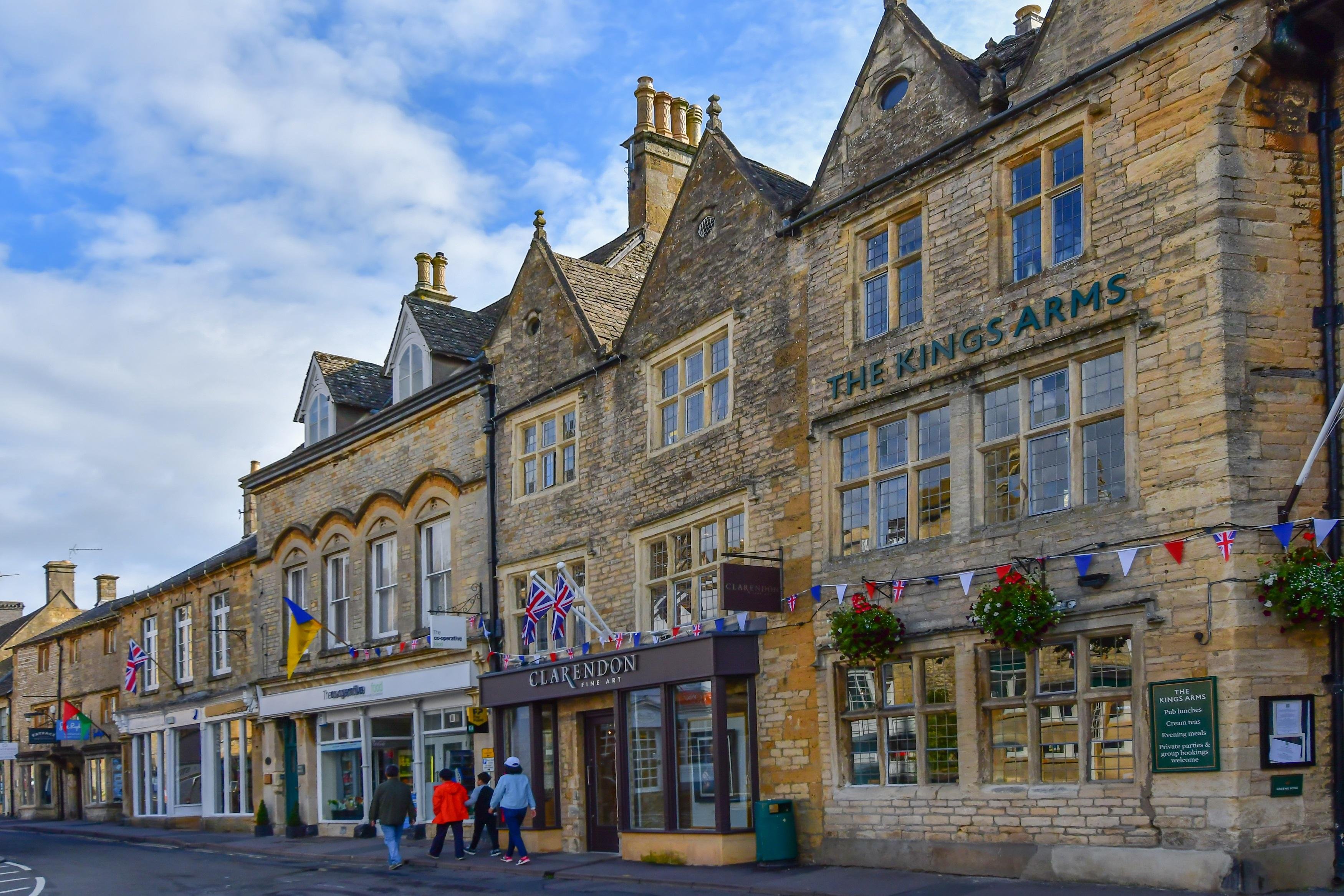
Bourton-on-the-Water arrives before lunch. You follow the Windrush downstream, crossing low arched bridges while ducks paddle in water shallow enough to count the pebbles. The model village—a 1:9 replica built in 1937—occupies a corner plot; entry costs extra. Stow-on-the-Wold follows, its market square funnelling into narrow "tures" once used to herd sheep. Antique shops and tearooms line the perimeter.
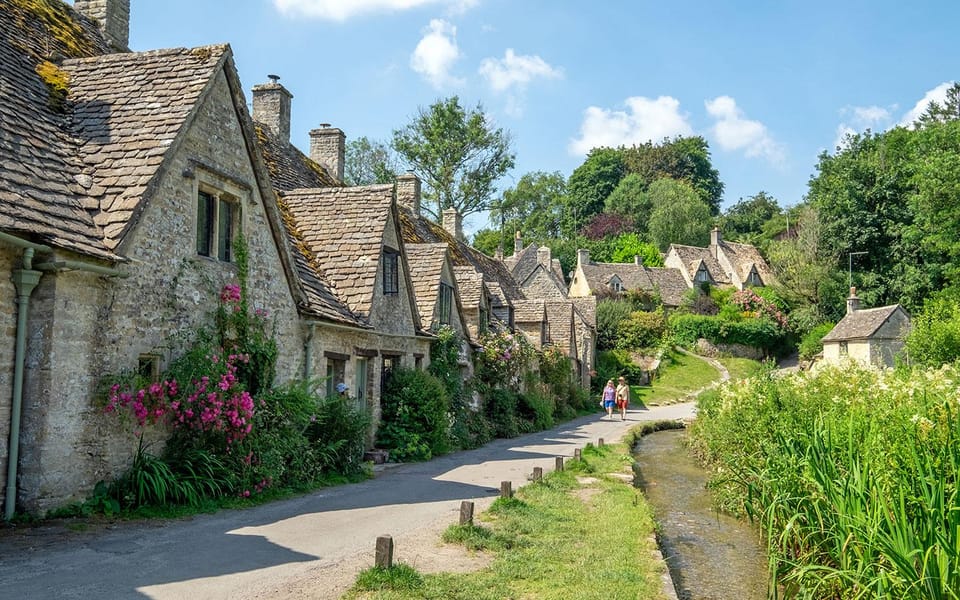
Bibury closes the loop. You pause at Arlington Row, where a terrace of stone cottages faces a water meadow managed as a trout farm since the 17th century. The footpath continues along the Coln, past a working mill and into fields enclosed by dry-stone walls. Most Birmingham day tours allocate 40 minutes here before the return journey, reaching the city by 18:00. The landscape you cross—unbroken since the enclosure acts—remains common land, grazed and public.
All the details about your upcoming adventure in one place
The Cotswolds occupies 790 square miles of Gloucestershire and five neighbouring counties, yet its defining characteristic—oolitic Jurassic limestone, quarried since Roman occupation—gives every village the same honey-gold complexion.
That uniformity of material created an architectural style so cohesive that in 1966 Parliament designated the entire plateau an Area of Outstanding Natural Beauty, the largest such protected landscape in England.
Wool built the Cotswolds. Between the 14th and 16th centuries, Cotswold Lion sheep—a breed prized for heavy fleeces—made the region's merchants wealthier per capita than those in London. They endowed perpendicular Gothic churches with soaring towers and commissioned manor houses that still anchor villages like Chipping Campden and Painswick. When the wool trade collapsed in the 17th century, the plateau slipped into economic dormancy, preserving its medieval street plans and vernacular stone cottages. Today that accidental conservation draws two million visitors annually to settlements that remain, in population, smaller than a London borough.
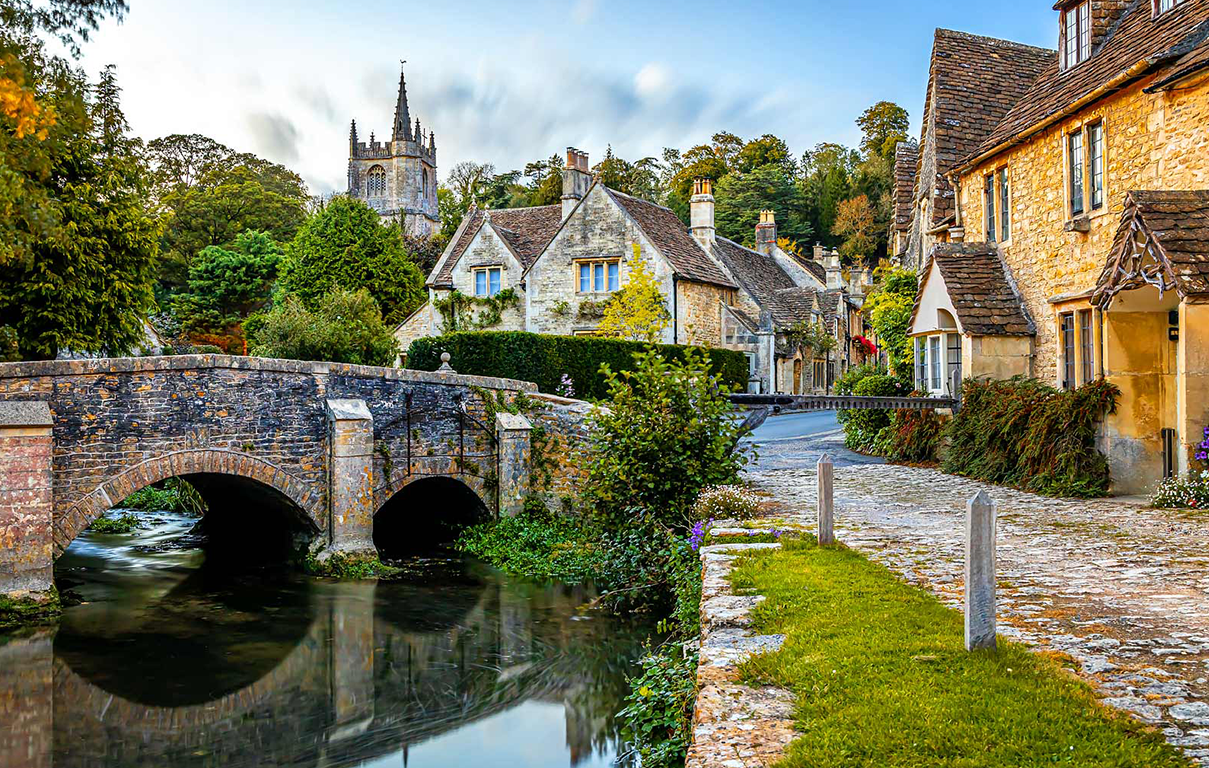
A day trip to Cotswolds from Birmingham begins 45 miles south along the M5, crossing the Severn Vale into a landscape of dry-stone walls, beech hangers, and villages strung along the spring line where limestone meets clay. Broadway, at the escarpment's foot, retains its wide coaching-era high street; Bourton-on-the-Water runs the River Windrush through its centre in shallow stone channels crossed by 18th-century footbridges. Bibury, which William Morris called England's most beautiful village, lines the River Coln with a terrace of 17th-century weavers' cottages converted from a medieval wool store. Stow-on-the-Wold, 800 feet above sea level, grew around a sheep fair that once corralled 20,000 animals in its market square.
The Cotswold Way, a 102-mile National Trail, traces the escarpment from Chipping Campden to Bath, crossing commons grazed since the enclosure acts and descending through ash woods into hidden combes. Villages open without ticket gates or entry fees; parish churches admit visitors during daylight hours. Most tours from Birmingham include three to five villages, a countryside walk, and return by early evening, converting the hour-long motorway corridor into access to a plateau that spent four centuries economically isolated and architecturally intact.

When the wool trade collapsed in the 17th century, the plateau slipped into economic dormancy, preserving its medieval street plans and vernacular stone cottages.
Sturdy walking shoes are recommended for exploring uneven village streets and countryside footpaths during your day trip to cotswolds from birmingham. Dress in layers to accommodate fluctuating autumn temperatures.
Travel light, as storage facilities are limited in smaller villages. Most areas are open, requiring no security screening for a day trip to cotswolds from birmingham.
Photography is permitted throughout the public areas of the region. Please respect local privacy when photographing private residences during your day trip to cotswolds from birmingham.
The region is suitable for families, with many parks and open spaces to explore. Plan your day trip to cotswolds from birmingham to include child-friendly village squares.
While many historic village centers are accessible, some areas feature cobblestones and steep inclines. Accessibility varies by village during a day trip to cotswolds from birmingham.
Numerous cafes and pubs are available throughout the villages. You may bring your own food for picnics in the designated countryside areas during your day trip to cotswolds from birmingham.
Opening Hours
00:00–23:59
Address
Cotswolds, Gloucestershire, United Kingdom
Public Access
0 GBP (Free entry to public villages and countryside areas)
Best arrival
09:00–11:00
Region
Cotswolds Area of Outstanding Natural Beauty
As public areas, there is no entry fee of 0 GBP and no booking is required for general access. If you have booked a guided day trip to cotswolds from birmingham tour, please check your specific operator's terms.
Recommended time
Full day
Planning a day trip to cotswolds from birmingham requires accounting for travel time to fully enjoy the limestone villages and rolling countryside. Arriving during the 09:00–11:00 window helps secure parking before the busiest period of the day. Those looking for day trip to cotswolds from birmingham tours should consider an early start to manage the afternoon influx of visitors, while those requiring day trip to cotswolds from birmingham tickets for specific local attractions should book ahead.
Crowd levels through the day
The Cotswolds emerged as England's wealthiest region during the medieval wool trade, when vast flocks grazed these limestone hills and merchants exported fleeces across Europe. Between the 12th and 15th centuries, wool profits financed the construction of grand 'wool churches' in villages like Chipping Campden and Northleach, their soaring perpendicular towers funded entirely by guild subscriptions. The same wealth built the manor houses and market halls that define a day trip to cotswolds from birmingham today—structures raised not by aristocrats but by cloth merchants who controlled the raw material that dressed the Continent. The region's distinctive honey-colored architecture stems directly from the local Jurassic limestone quarried at sites like Guiting and Blockley. Stonemasons developed a vernacular style between 1400 and 1650: steeply pitched roofs to shed rain, mullioned windows, drip moldings, and the characteristic Cotswold stone slate that weathers to amber and gold. When the wool trade collapsed in the 16th century following Flemish competition and the dissolution of the monasteries, the Cotswolds entered a long economic decline that paradoxically preserved its built heritage. Villages remained too poor to rebuild in fashionable Georgian or Victorian styles, leaving streetscapes frozen in late-medieval form. The Arts and Crafts movement rediscovered the Cotswolds in the 1890s. William Morris settled in Kelmscott, C.R. Ashbee established his Guild of Handicraft in Chipping Campden in 1902, and architects like Ernest Gimson revived traditional stone-building techniques. This romantic revival attracted writers, artists, and preservationists who campaigned to protect the limestone villages from industrial development. By 1966, the Cotswolds Area of Outstanding Natural Beauty was designated, safeguarding 790 square miles of wool-trade architecture. Today's visitors on day trip to cotswolds from birmingham tours walk streets that wool built, exploring a landscape where economic stagnation became architectural salvation.
Medieval wool trade establishes the Cotswolds as England's wealthiest region, financing construction of grand churches and market halls
Local Jurassic limestone quarries supply distinctive honey-colored stone for vernacular manor houses, cottages, and bridges
Dissolution of monasteries and Flemish competition collapse the wool trade, beginning centuries of economic stagnation that preserves medieval streetscapes
Arts and Crafts movement rediscovers the Cotswolds; William Morris, C.R. Ashbee, and Ernest Gimson revive traditional stone-building techniques
Cotswolds Area of Outstanding Natural Beauty designated, protecting 790 square miles of limestone villages and wool-trade heritage
Heritage tourism replaces agriculture as the region's economic foundation, with visitors drawn to preserved medieval architecture
Stand at the bottom of the lane looking up at the historic weavers' cottages to capture the classic honey-colored stone alignment. This spot is essential for any day trip to cotswolds from birmingham, reflecting the quintessential rural character of the region.
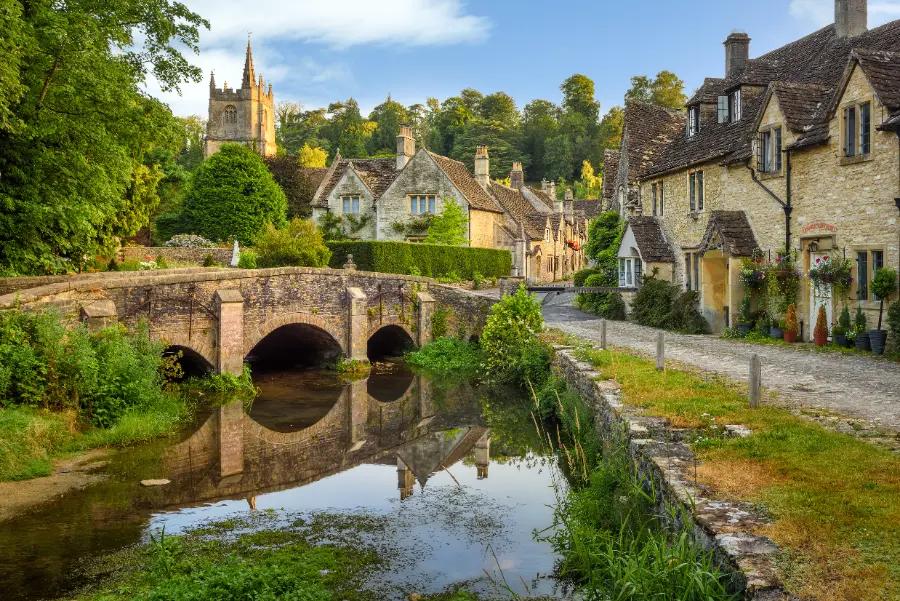
Position yourself on the small stone bridge over Bybrook stream for the iconic view of the village houses rising from the water. This provides a serene composition of the limestone architecture and lush greenery.
Stand at the base of this historical folly to capture expansive vistas across the surrounding countryside and limestone escarpments. It serves as a highlight on many guided day trip to cotswolds from birmingham tours for those seeking panoramic landscape imagery.
Framed by the low stone bridges, the shallow waters flowing through the village center offer a picturesque scene of English village life. It is a popular stop for visitors booking a day trip to cotswolds from birmingham tour to photograph the reflection of traditional storefronts.
Planning a day trip to cotswolds from birmingham requires balancing picturesque village walks with manageable transit times for younger travelers. Exploring these rural landscapes offers an open environment for children, though visitors should note that infrastructure varies significantly across the region.
Most village streets feature historic cobblestones or narrow pathways, so a sturdy, all-terrain pushchair is recommended for your Cotswolds excursion tour. Compact carriers are often easier for navigating tight alleys and historic sites
To maintain a comfortable rhythm, aim to arrive during the 09:00–11:00 best arrival window to secure parking and avoid congestion. This approach ensures a relaxed flow for those booking day trip to cotswolds from birmingham tours
Public restrooms are available in main villages, though baby-change stations can be limited in older buildings. Checking village maps upon arrival helps identify accessible amenities before you start your day trip to cotswolds from birmingham tickets route
With 0 GBP entrance fee, the rolling hills and public footpaths provide ample space for families to roam. Keep children close when near livestock, as many routes cross active farmland areas.
Finding a meal during your day trip to cotswolds from birmingham is best achieved by exploring the traditional stone-built pubs and tea rooms scattered throughout these historic villages. As you plan your day trip to cotswolds from birmingham tours, keep in mind that local eateries emphasize seasonal English produce and regional ales.
A high-end spot in Kingham offering elevated takes on British classics, perfect for a relaxed lunch. It is highly sought after, so consider your day trip to cotswolds from birmingham tour schedule to secure a table.
A cozy stop for artisanal bread and coffee located in the heart of the region. This venue is ideal for a quick bite while checking your day trip to cotswolds from birmingham tickets for afternoon excursions.
A classic pub environment serving hearty portions of local fare. It provides a quiet atmosphere for those seeking a break from the main tourism hubs.
Everything you need to know for your journey
The Cotswolds region is open 24 hours a day, 00:00–23:59. You can visit anytime during your day trip to cotswolds from birmingham.
There is an entrance fee of 0 GBP for public villages and countryside areas. Entry is completely free for your day trip to cotswolds from birmingham.
The best arrival window is 09:00–11:00 to avoid crowds. This is the ideal time to start your day trip to cotswolds from birmingham.
Yes, regional trains and buses connect Birmingham to various Cotswolds hubs. Plan your day trip to cotswolds from birmingham using local transit schedules.
Yes, dogs are generally welcome on public footpaths. Always keep them on a lead during your day trip to cotswolds from birmingham.
Accessibility varies, though many villages have cobblestone streets. Research specific accessibility features before your day trip to cotswolds from birmingham.
Yes, various local operators provide guided day trip to cotswolds from birmingham tours. Check live inventory for availability.
You do not need day trip to cotswolds from birmingham tickets for village entry as it is free. Tickets only apply to specific private attractions.
Wear sturdy walking shoes and layers. Comfort is key for a day trip to cotswolds from birmingham.
Yes, many local pubs and cafes operate throughout the area. Enjoy local cuisine during your day trip to cotswolds from birmingham.
Join thousands of happy travelers who have discovered this incredible experience
Book Your Experience Now